

Christabel Mintah-Galloway published an exceptional essay this spring called “White People Need Ancestral Excavation,” and she’s right about almost everything in it. I encourage everyone to read it. It truly is a brilliant piece.

“White people have a community problem,” she said. “The problem isn’t that you don’t know how to behave around Black people. The problem is you have no culture to go home to, so you show up at somebody else’s door and take what isn’t yours.”
And she’s right. We’ve turned into greedy little takers.
It reads as extraction, because it is extraction, and extraction is exactly the relationship whiteness was built on in the first place. Take labor, take land, take resources, leave the people you took from to absorb the cost, and then get upset when people want their shit back. Colonizer asshole behavior.
Cultural appropriation is the symbolic, low-stakes version of that same shape. Take the aesthetic, take the vocabulary, take the spiritual technology somebody else’s ancestors built and paid for, and leave the actual cost of the discrimination, the violence, and the labor of explaining yourself to sit with the people it came from.
Let me explain.
You can see the shape clearest in the double standard, because the double standard is the proof. A white kid with dreadlocks might get called edgy. A Black girl with locs gets sent home from school or written up at work for the exact same hair, and before some white asshole says that’s not true — the research is there, look it up. Black women are roughly fifty percent more likely to be sent home from a job over their hair, and a hippie white boy with locs is measurably less likely to face school discipline than a Black girl wearing braids or twists for the same reason.
Twenty-some states have had to pass laws just to stop schools and employers from punishing Black people for the hair they were born with, while the same hairstyle on a white head gets treated as a “fashion choice.” Think about that. A law had to be passed over hairstyles, so racist schools couldn’t punish Black people for wearing their normal culturally appropriate hairstyles, all because white people, having no culture of their own left standing, made the empty space itself the standard everyone else gets measured against, and anything that didn’t fit inside that emptiness got called unkempt, unprofessional, a distraction, instead of what it actually was, which was somebody else’s culture still alive and refusing to disappear on command.
That the aesthetic gets praised, and the people it actually belongs to get penalized for the unstripped version, while nobody’s looking twice at the pastie dickhead who took the look.
San Francisco State University Cultural Appropriation Confrontation

You see it again with anything sacred that gets worn as a costume instead of earned through a relationship — a headdress that took someone decades of standing inside a specific community to be given, put on for a festival weekend or Halloween party by someone with no relationship to that community at all. That’s not bridging two cultures. That’s the same move as a museum case full of someone else’s grave goods, just smaller and worn on a body instead of locked behind glass.

And none of it runs the other direction, which is what I think actually gives the game away. Nobody is showing up uninvited to mine, a white American’s intact, living culture for an aesthetic, because there isn’t one sitting out in the open to take. The traffic only ever goes one way, white people toward everyone else, because colonizer’s taking, is the only move available to somebody standing at an empty table. You can’t trade what you don’t have. You can only take, and call the imbalance solidarity because that sounds better than the truth, which is that it’s a one-way withdrawal from an account you never paid into. And you fuckin’ know it.
It also quietly hands your survival work to somebody who already has their own. Every time a white person treats a Black or Indigenous person as a free encyclopedia of culture, healing, and political education, that’s unpaid labor moving in one direction, on top of whatever that person is already carrying. Christabel said this beautifully in her own piece — she does not have the time, she has her own excavation to finish, recovering what was taken from her people is not done. Showing up at her door asking her to hand you a replacement for the thing you never went and found for yourself isn’t connection.
That’s the actual bad look, and it’s not really about intent. A person who keeps eating at other people’s tables and never learns to cook, reads as a permanent guest who never grew into a host, no matter how warmly they mean it. The fix was never “stop showing up.” It’s “stop showing up empty-handed.” You don’t get invited to the table as a peer until you’ve got some shit of your own to set down on it.
I remember being a teenager, going out to camp parties on the weekends to drink Mad Dog 20 and wine coolers by the bonfire, swim and play cards, the same way we’d watched the adults do our whole lives. There was always that one friend who never brought their own alcohol, just bummed it off everyone else all night. Eventually we stopped telling that friend about the parties. We called them a mooch, and a leech. Then that friend got furious at us for cutting them out of the circle.
The nerve of that mindset always rubbed me the wrong way. Like, how dare you? I can imagine it’s a similar feeling Black and other minority communities have towards white people, just on a grander scale.
But that’s how white people show up in other people’s cultures and communities. We need to bring something to the table or fuck off. And bringing something means remembering what our own actual cultures are. They’re there. We just have to go dig them up.
We Sold Our Culture
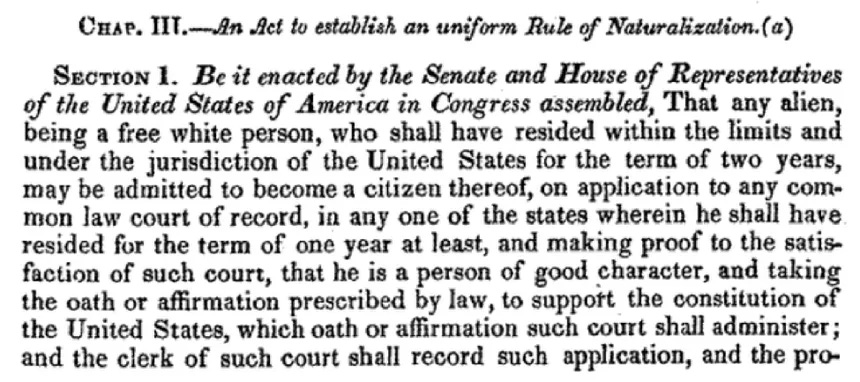
Let’s go beyond where Christabel stopped, though, because “you have no culture” is too generous. It’s not that we have no culture. It’s that we sold ours, on purpose, in installments, over about a hundred and fifty years, and most of us don’t even know the sale happened. We think we were born into an absence. We weren’t. We were born into a transaction, and the receipt is sitting in a federal statute book if anybody wants to go look at it.
1 Stat. 103, the Naturalization Act of 1790.
“Equality scares those whose lives depend on the existence of privilege.” ~ Karim Wafa
In 1790, the first Congress passed the Naturalization Act, saying only a “free white person” could become a citizen of the United States. Not a free person. A free white person. The “free white person” clause didn’t get fully struck from naturalization law until 1952. The groups not in dispute were the English, Scots, Scots-Irish, German, Dutch, and French Huguenot. They didn’t have to qualify for their “whiteness.”
But, for over a century and a half, “white” wasn’t a description, it was a legal application you had to satisfy the criteria for, and a huge number of European immigrants did not automatically make the cut. The Irish weren’t white when they got off the boat. Neither were Italians, Sicilians especially, nor Jews, nor Slavs, nor Greeks. They were a different kind of immigrant labor, a rung the Anglo-Protestant establishment looked down on the same way it looked down on everyone darker than itself. Historians who’ve spent their careers on this, such as, Noel Ignatiev, David Roediger, Karen Brodkin, and Nell Irvin Painter, all tell some version of the same story. That whiteness in America was not a starting point, it was a finish line, and you had to run a special kind of stupid race to get there.
And the race had an entry fee. You paid it in pieces. You paid it by joining labor unions that excluded Black workers so you could get the good jobs. You paid it by moving into neighborhoods with restrictive covenants that kept Black families out, which meant leaving the old ethnic enclave behind. You paid it by anglicizing your name, dropping the language by the third generation, folding your specific village’s saints’ days and harvest blessings and mourning customs into a flattened, suburban, English-language Christianity that had already scrubbed most of its own regional texture for the sake of looking properly American.
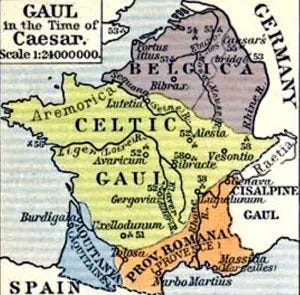
For example, my own French ancestors were from the Gaulish Celtic tribes. They were polytheistic, with druid religious leadership, that practiced animistic pre-Christian Gaulish religion, built around the idea that the natural world was inhabited by divine presence. Springs, rivers, groves and certain trees were treated as sacred, often as dwelling places of specific deities, rather than just symbols of them. There wasn’t just one unified pantheon across Gaul. Worship was tribal and regional, with dozens of local gods, though some names recur widely enough to be considered pan-Gaulish, like, Taranis, Teutates, Esus and Cernunnos. Then Rome came and destroyed everything my ancestors were and forced them into Christianity.
Every rung up into whiteness cost you a piece of the soul you walked in with. Nobody handed them a culture when they got here. White people handed what little was left of theirs over at the door.
That’s the part Christabel’s beautifully written piece doesn’t mention and I think it matters, because “you have no culture” suggests white people are an absence walking around in a body, and absence doesn’t go looking for anything. A theft does. If you understand that something specific was taken from you, not vaguely, not poetically, but as a literal, traceable trade you can find the paperwork for, you stop being a blank and start being someone with a reason to dig.
So, why don’t we dig?
Christabel posted her piece and got a wave of comments saying it was too hard, that there was nothing back there worth finding, that we’d have to go back thousands of years. That’s not an assessment. That’s a story people tell themselves so the work stays hypothetical, because the actual timeline is so recent it’s almost humiliating.
Take German-American culture, which before 1917 was one of the largest, richest immigrant cultures in the country. German-language newspapers in nearly every city with a German population, German-language public school instruction, German Lutheran and Catholic services, breweries, singing societies, social parks. Davenport, Iowa had one called Schuetzen Park that was an inn, a dance hall, a zoo, a bowling alley, a roller coaster, twelve thousand people through the gates on a big day.
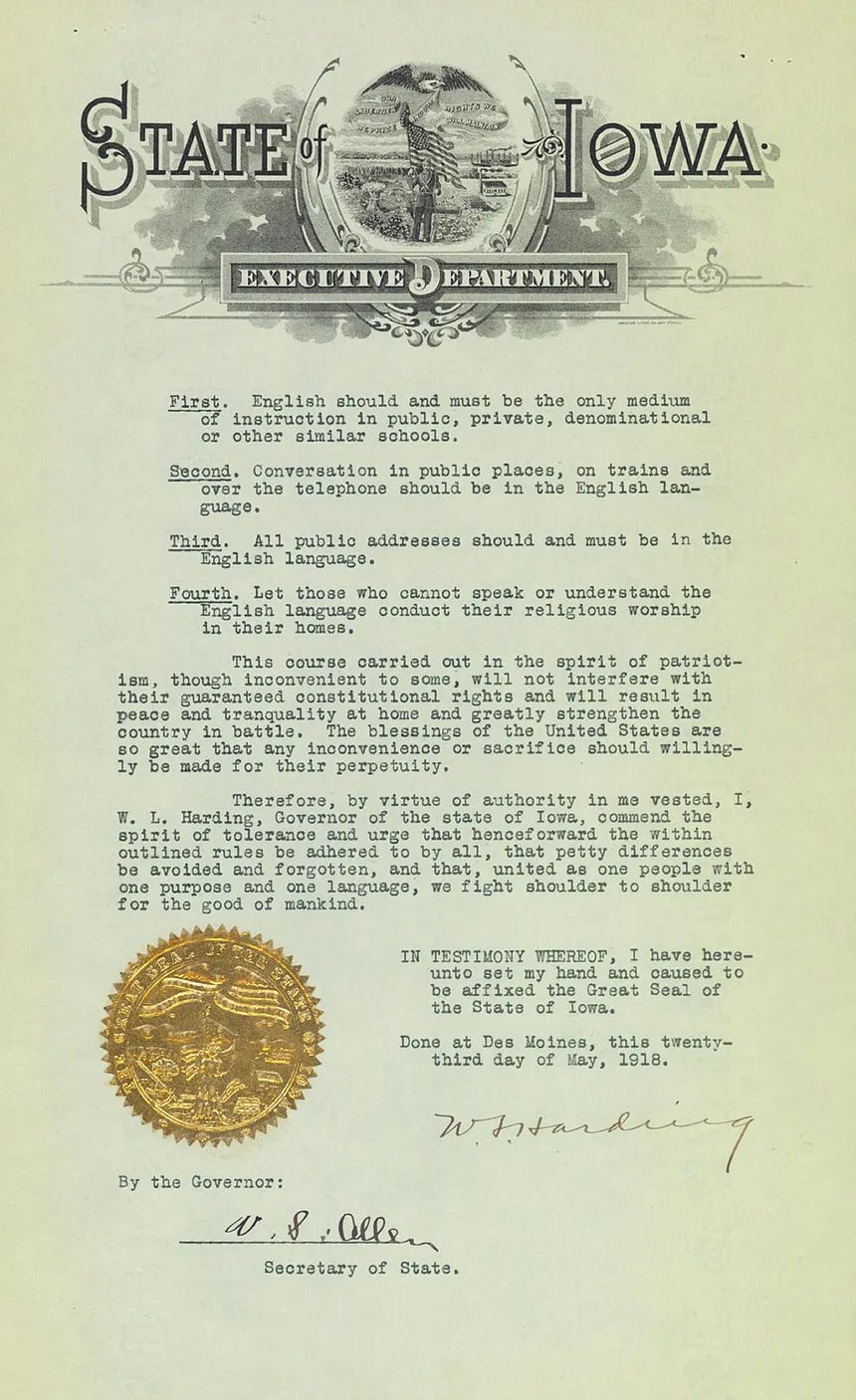
Then the U.S. entered World War I, and in about two years, on purpose, with government help, almost all of it got torn out by the roots. By March 1918, thirty-eight of forty-eight states had restricted or ended German-language instruction in schools. Fourteen states banned it outright. Iowa’s governor issued something called the Babel Proclamation, which didn’t just ban German, it banned speaking any foreign language in public at all — German, Norwegian, Swedish, Dutch, Czech — on the phone, on the street corner, in church, in school. People got arrested for it.
Students in Davenport burned more than five hundred German-language books pulled from their own school library. The bank changed its name. The park changed its name and closed for good five years later. The city’s German-language daily announced it was shutting down because of the prejudice against it. The Supreme Court eventually ruled these laws unconstitutional in 1923, in Meyer v. Nebraska, but by then it didn’t matter. The law didn’t have to stay on the books to finish the job, it just had to scare one generation badly enough that they stopped teaching their kids the language, and that generation’s grandchildren grew up being told there was nothing back there.
That is not thousands of years ago. That is one war, two years, and a handful of state legislatures. Somebody reading this has a great-grandparent with an actual arrest record in an actual Iowa courthouse for speaking Norwegian on a sidewalk in 1918. That record still exists. It has a date on it. Nobody has to excavate Beowulf to find it. They just have to request a fucking file.
And German-American culture is just the most legally documented version of a pattern that ran underneath almost every immigrant group in this country for most of the twentieth century — kids punished for speaking Italian or Polish or Yiddish or Greek at school, names anglicized at Ellis Island or quietly at the DMV thirty years later, suburbanization and the GI Bill pulling people out of dense ethnic neighborhoods and into identical houses where nobody was left who still made the bread the old way.
And what survived all of that didn’t need rebuilding from scratch either. Norwegian-Americans aren’t reaching back to the Viking Age to find dugnad, the practice of neighbors showing up to do the heavy, unpaid work nobody can do alone, they used it to get through COVID lockdowns in 2020, in living memory. Meitheal still happens in rural Ireland. Sons of Norway lodges, German Vereins, Scottish clan societies, Czech and Slovak Sokol halls, Italian-American mutual aid societies — a lot of these have been open, continuously, for over a hundred years, run by people who would be thrilled if anybody under seventy walked through the door asking questions. None of this needs an archaeology degree. It just needs a simple recorder, an awkward phone call to the oldest living relative, and a visit to whichever county historical society or immigrant museum has been sitting there for decades waiting for somebody to walk in and ask a question.
So “it’s too hard” doesn’t survive contact with either of those facts — not the date stamped on an arrest record, and not a lodge that’s been leaving its lights on for you since 1923. Don’t be so fuckin’ lazy, white people. Damn. Go do the work and rediscover where you come from so you don’t end up a thief on the Black community doorstep again. It’s embarrassing, especially given how much information is at our fingertips. We just need will and curiosity.
What’s actually happening is that “thousands of years” feels safer to say out loud than “two generations,” because two generations means somebody specific did this to your specific family, on purpose, in a year you could look up, and somebody in your specific family decided silence was safer than fighting it. Fuck that. The days of being silent are over. You’d have to sit with that instead of a vague, comfortable myth about the deep unknowable past. Laziness is real. But what’s actually being avoided isn’t the labor of digging. It’s the discomfort of finding out how recent, how deliberate, and how small the actual loss was — and how small the first step back would be too. However, I will always encourage going back as far as you can. Why stop at the corner… keep going.
So if it’s not actually hard, why does it feel impossible?
Because there’s a real reason to flinch. Every time white Americans have gone looking for pre-Christian European ancestral practice in the last hundred years, somebody has shown up fast to turn it into a master race origin story. The Asatru Folk Assembly built its theology on the claim that Odin and Thor live specifically in the blood of Northern European people. Its founder called it “metagenetics” and disguised it in just enough borrowed psychology to sound like erudition instead of the bullshit it actually is. In 2016, roughly 120 Heathen organizations across 80 countries signed a statement called Declaration 127 specifically to say, “not us, get out, this isn’t what this is.” That fight is still going on inside modern Heathenry right now. So when somebody tells you “go find your Norse roots” and your stomach drops a little, that’s not paranoia. The people who already did that and turned it into something monstrous got there first and loud, and they’re the reason the rest of us are scared to even look. Fucking, look anyway. Stop letting fear drive your decisions. Everything we’ve ever wanted is on the other side of fear.
Practice vs Identity
A practice is something you do, with people, that costs you labor and time, and anyone willing to show up can join. An identity is something you are, by blood, that makes you better than or separate from people who don’t share it. Dugnad is a practice. Meitheal is a practice. A Highland ceilidh, a German harvest table, a saint’s day procession through a Sicilian village — practices, open doors, no purity tests required. Metagenetics is not a practice. It’s a hierarchy wearing a costume made of your grandmother’s actual culture. The second anybody tells you that you have to prove bloodline to be allowed to participate, you’re not standing in folk culture anymore. You’re standing in a cult that stole it. Don’t be that asshole. We live in the “know better, do better” times and nobody’s getting off the hook.
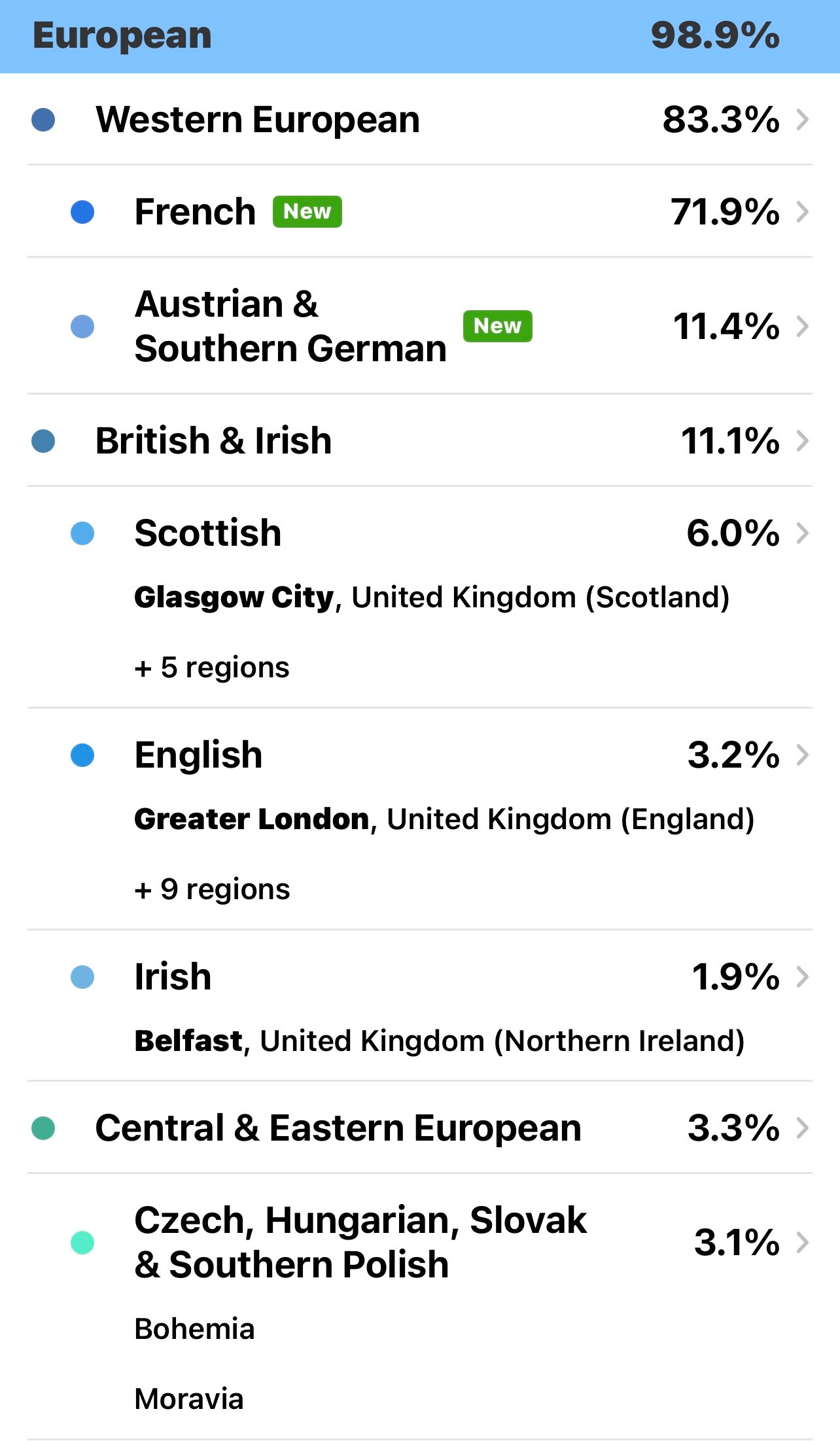
So here’s where you actually start, and none of this requires you to believe in anything or convert to anything. Find the village, or BE the village if you can’t find one, not the country. “German” or “Irish” or “French” or “Norwegian” tells you nothing useful; the records that survive — parish baptisms, ship manifests, county land deeds — are local, and a county historical society or a genealogy librarian can get you further in an afternoon than you’d expect. Personally, I used 23&Me and got a comprehensive breakdown of my lineages based off of DNA. The accuracy is impeccable.
But, if that isn’t something you feel comfortable doing, then call the heritage organization that’s already doing the thing with no ideology attached, the lodge or the Verein or the clan society or the mutual aid hall, and go to one event before you decide whether it’s for you. Ask the oldest living person in your family what actually happened at the table the day somebody died, or got married, or brought in the harvest. Not what religion they were, but rather, what they did, who showed up, who cooked, who cleaned up after. Write it down. You are closer to the last person who remembers than you think you are.
And then do the part that’s easy to skip because it feels like homework, instead of culture. Don’t stop at learning it, rebuild it with the people around you right now. A dugnad isn’t a museum piece you observe, it’s a tool library and a meal train and a kid-watching rotation with your actual neighbors, the people on your actual street, organized with the expectation that when your turn comes the field fills with people. Get out of that colonizer mindset that you are owed without having to give. Nobody owes you shit.
Buying a candle that says “Celtic” on it is not reclamation. It’s just one more purchase, made alone, which is exactly the isolation this whole problem is made of. The point was never the aesthetic. The point was always that nobody carried the heavy thing by themselves.
Be A Race Traitor
I want to end where Christabel’s piece gloriously pointed without a quiet landing. She told her readers, don’t be an ally, be a race traitor. That phrase belongs to Noel Ignatiev, the historian who wrote the book on how the Irish became white, who co-founded a journal literally called Race Traitor, whose stated position was that treason to whiteness is loyalty to humanity. So when that phrase showed up in her piece, it was reaching for a real, six-decade tradition, not a slogan. And the thing that tradition is actually arguing, the thing all white people need to sit with, is that refusing whiteness and recovering what whiteness took from you are not two separate assignments. They’re the same act. Whiteness was built by stripping those specific things out of specific families. Going and getting them back, on purpose, in public, with your actual neighbors, IS the treason.
So I ask you this: Do you know what your great-grandmother put on the table the day somebody in the family died? Not what religion she was. What she actually cooked, who showed up to eat it, who washed the dishes after. If you don’t know, find out before she’s not the last person who could have told you. What traditions did your ancestors celebrate? How did they dress? Decorate their homes? What was important to them to preserve throughout time before Christianity and colonization forced us to conform? That’s the real work Christabel was actually asking for, and it starts at your own kitchen table, NOT somebody else’s.
If a paid subscription isn’t in the cards right now, I completely get it — truly. But if you’ve ever read something here and thought “damn, she needs to keep doing this,” you can throw a few bucks in the tip jar over at Buy Me a Coffee.
No pressure. No guilt. Just me, asking nicely, with my hand out like a very earnest raccoon who writes controversial essays.
☕ buymeacoffee.com/eeviebateman
Thank you for being here. Seriously. You make this worth doing.
This was a good one.
The injustice we have today is written into our constitution. We the people meant white landowning men. That is it.