

White people, we’re a problem.
Not in the way we prefer to see ourselves though. Not the well-intentioned, quietly evolving, I’m one of the good ones way we’ve been performing our racial consciousness for decades. We’re a problem in the way that willful ignorance cloaked as curiosity is always a problem. We have mistaken our helplessness for humility and we have been making black people pay for that mistake.
White people know how to find information. We are not intellectually incapacitated just because we lack melanin. We research investment portfolios, medical diagnoses, vacation itineraries, and the precise thread count that separates a good sheet set from a great one. The internet is not broken and Google has not failed us. And yet, reliably, we show up in black writers’ inboxes asking to be handed a step by step, how to be an ally curriculum, as though centuries of black scholarship, published and accessible and sitting two clicks away, do not already exist without our personal invitation to discover it.
Over the years, I’ve tried to understand what is actually driving this behavior? Are we just lazy? Are white people just so used to taking from black people that we’ve coded our DNA over centuries to wait and take? Are we helpless, like infants and need to have our hands held and feelings coddled?
It’s certainly not ignorance. We know what we’re doing.
I’ve learned it’s mostly psychological. It is need. Specifically, the need for people of color to personally witness our becoming. To stand there while we announce our discomfort and confirm that we are, in fact, progressing toward innocence. The question, where do I start, is almost never really about starting. But, more about being seen starting. It is about proximity to blackness functioning as moral currency, and we have been spending it without ever acknowledging the transaction.
This is worth sitting with.
White culture has a long, well-documented history of extracting intellectual, emotional, and physical labor from people of color while simultaneously constructing narratives in which that extraction is invisible, voluntary, noteworthy or charitable.
What we are doing when we slide into those inboxes is not a departure from that history. It is a continuation of it in more palatable language. Progressive vocabulary does not neutralize the same old demand. The question we should be asking ourselves is not where to start. It is why we need someone else to tell us. Why independent inquiry feels insufficient without black validation attached to it. Why we have confused being led with being educated, and why we keep outsourcing the discomfort that is, frankly, ours to carry.
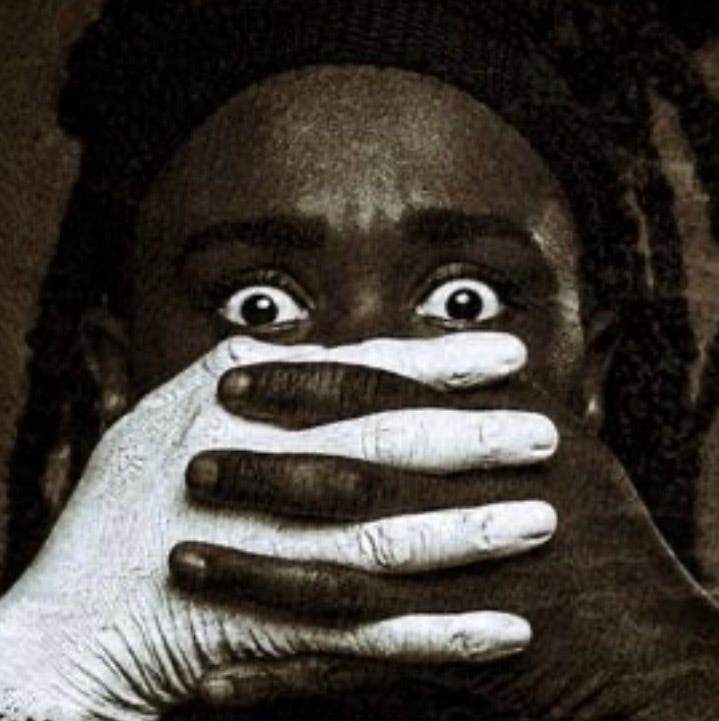
Photo credit to Jahi Chikwendiu —- a Washington Post staff photographer
Their exhaustion is not a teaching moment. It’s a verdict. The jury has spoken.
And we should understand what that means because we have watched MAGA behave this way and found it unconscionable. We have watched them demand that the people they’ve harmed absorb their discomfort, explain their own oppression, and stand close enough to witness the conversion. We have said, correctly, that is not how it works. You don’t get to hurt people and then require their presence while you figure out how to stop. We don’t want MAGA at our table while they work that out. We want them to do the work. Just not on us.
Black people have been saying the same thing to us for longer than we’ve been saying it to MAGA. The difference is we’ve been too comfortable and asleep to hear it.
It needs to be noted that black people have been enabling this behavior too. Not out of weakness. Out of something far more intricate than that, out of generations of conditioning that made survival dependent on managing white feelings, out of genuine goodness, out of the hope that this time the investment might actually take. When a person of color answers that inbox message, builds that framework, takes that call, explains that thing one more time, it is almost never because they think it is their job. It is because they are, in many cases, more committed to our humanity than we have ever been to theirs.
But generosity can function as infrastructure for dependence.
And at some point the answer has to stop coming, not because black people owe us their withdrawal, but because continued access without accountability is how nothing ever changes. Every time the information gets handed over, every time the question gets answered patiently, every time white discomfort gets managed by a black person who had better things to do, it confirms for us that this is still an available option. That we can keep outsourcing our growth and someone will keep absorbing the cost.
So what should people of color do instead when a white person slides into their inbox clutching their moral résumé and asking to be guided toward the light?
Leave it on read.
Or better yet, send one line. A single search term. A three word reply that says “Google is free.” Not out of cruelty, but out of a refusal to participate in a dynamic that has never once been reciprocal. The redirection is not unkind. It is honest. It says your healing is not my labor and I will not pretend otherwise to make you comfortable.
The honest to god truth is that white people do not need to be guided. We need to be refused. Refusal is the only condition under which we are forced to develop the capacity we’ve been outsourcing for generations.
So here is the best advice I can give to every white person who has ever described themselves as one of the good ones or who’s ever said, out loud, “not all white people.” Stop seeking the designation. Good is not a title that gets awarded by email. It is not confirmed by a person of color who responds warmly or a friend who says you’re not like the others. It is not earned by finishing a reading list or showing up to a march once. The performance of goodness is just another way of making someone else responsible for how you see yourself.
Google the information you need yourself. Do the reading alone. Sit with what it breaks open. Let it change how you move through the world without requiring anyone to notice. Do the right thing in rooms where no one who looks like them will ever know you did it.
That is the work.
Quiet, unwitnessed, uncomfortable, and entirely yours. The good ones don’t need to be told they are. They already know what it cost them to get there.
Eevie, thank you for making me uncomfortable today. This is absolutely spot-on. I need to sit with myself for a while. My lifelong best friend is Black, and I am white. Recently I had texted her a link to your column about how white women suck, and Black women were right about everything, and she very politely told me that it would read differently if it came from a Black woman's perspective. Still, big props to you for keeping it real and using white privilege to say the quiet parts out loud. We owe our sisters of color a debt that can never be fully repaid, but educating ourselves about their journeys is a start, however small.
We should make every effort to pass on what we have learned, so future generations of women, from every walk of life, will be inspired to choose to respect themelves, and each other.