

There was another candidate.
There almost always is. In lieu of all of the captured candidates who are currently the popular picks across the country, there are the other, better choice candidates who did the reading, built the relationships, showed up to the town halls before they were even thinking about campaign strategy. The candidates with a clean record, not because they were sanitized by consultants, but because they actually live by what they say their believe. Someone who didn’t generate drama, didn’t have a redemption arc, didn’t give anyone a story to tell about rough edges and working-class authenticity.
You probably didn’t hear much about them.
And it has nothing to do with not being qualified or their politics being wrong. No. It’s because the political media ecosystem, and yes, that includes the independent Substack world that was supposed to be the antidote to all of this, had already decided what the story was. And a quietly competent person with a clean record and genuine convictions is not a story. Not the kind that gets shared anyway. Not the kind that drives open rates.
Candidates like Graham Platner get platformed instead.
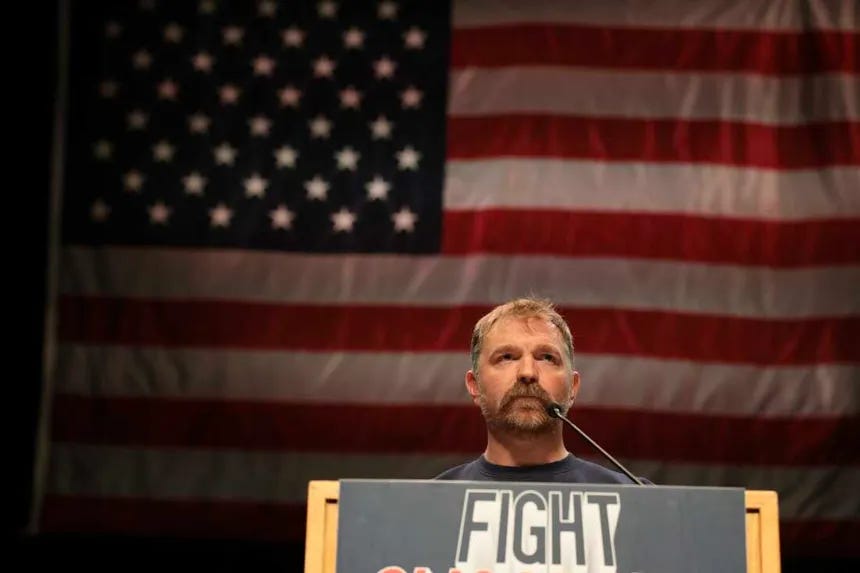
Platner is a Maine oyster farmer and Marine combat veteran running as a Democrat for U.S. Senate, trying to unseat Susan Collins. On paper, the narrative writes itself. Working class. Military service. Outsider. Anti-establishment. The kind of candidate the progressive Substack ecosystem has been waiting to crown since 2016.
Then just before his campaign launched, nearly 2,000 Reddit posts written under the handle P-Hustle were deleted. Posts asking why Black people don’t tip. Posts telling women who were sexually assaulted that they should take some responsibility for themselves and not get so drunk they end up in situations they didn’t intend. Posts calling rural Mainers, the very people he was asking to send him to Washington, racist and stupid.
It’s no accident that P-Hustle deleted those messages just before he announced his candidacy. Not after reflection, no. But as damage control before he put himself in the spotlight to try to convince Mainers he was their guy. Which means he knew exactly what he was doing.
When the posts surfaced anyway, Platner apologized, of course. Attributed it to PTSD, to isolation, to the disillusionment of a combat veteran who came home to a country that didn’t make sense anymore. That may all be true. PTSD is real. The wound is real. But the deletion was also real. And an apology that only arrives after exposure is not accountability. It’s crisis management. And campaign teams prepare for this, then hand over a script and film it for the world to see. There’s nothing genuine about that.
I don’t need to speak much on this, but we’ve all seen the tattoo. The Totenkopf — the death’s head symbol of Hitler’s SS. He said he got it drunk on leave in Croatia in 2007, picked it off a flash wall, had no idea what it meant, which we later found out was also a lie because he had bragged about it to friends and family. His campaign disclosed it themselves, to a liberal podcast, after hearing that opposition researchers were already circling it. When the backlash came, he was contrite. Months later, in a different interview, he shifted. The more they talk about it, he said, the more he gets to talk about the fact that he got it as a combat Marine. How convenient.
His campaign political director, who’s also a former Maine state legislator that resigned after learning about the Reddit posts, posts that had been kept from her for months, said publicly that Platner, a self-described military history buff, would almost certainly have known the tattoo’s significance.
And then there’s his wife.
Amy Gertner is Jewish. Platner’s campaign used that fact as evidence. They said he danced shirtless with that tattoo at his brother’s wedding, to his Jewish wife, so how could he have known? His wife became his human shield. And separately, Gertner told Platner’s political director, in the early days of the campaign, that Platner had been sexting other women while married to her. The campaign knew and kept it from his constituents until the story broke, weeks before the run off. Platner’s response was to say that he and his wife went through something hard because of him and then pivot immediately to fighting for hospitals and paychecks.
His wounded wife was now his character witness. His Jewish wife was made to be his absolution. That is not someone being held accountable. That is a man who has learned which relationships can be deployed when the story needs a turn.
None of this disqualifies his politics. Some of his policy positions are genuinely good. But the question was never only about policy. It was about character. And character is not what someone says when people are watching. It’s what someone does when they think no one is.
Platner thought no one was really paying attention when he wrote those posts. He thought no one would notice when he got that tattoo. He thought the texts would remain private.
He was wrong each time. And each time, the response followed the same arc of exposure, contrition, pivot, defiance. The patterns patterned and I couldn’t help but notice.
I think voters need to learn to step back and look at things from the outside in. Sometimes you just gotta zoom out from the system we’re all in. Platner didn’t build himself. The ecosystem built him.
There are large, influential Substack creators, people with tens of thousands of subscribers, people whose endorsements move money and attention, who decided early that Platner was the story. The outsider. The authentic one. The working-class veteran who would fight for real people against the machine. Another state “actor.”
And once that decision was made, everything that complicated it became a threat to the narrative. The Reddit posts became smears. The tattoo became a hit job by DC insiders. The infidelity became gossip. Every person who asked a hard question became an establishment operative trying to protect Susan Collins. But we know it’s all bullshit.
I’m not going to name the creators. You know who they are. You follow them. Some of them you trust, maybe still do. That’s the point. I followed a few myself until I read between the lines and saw how they operated. The language they used. The things they spoke on… and didn’t speak on.
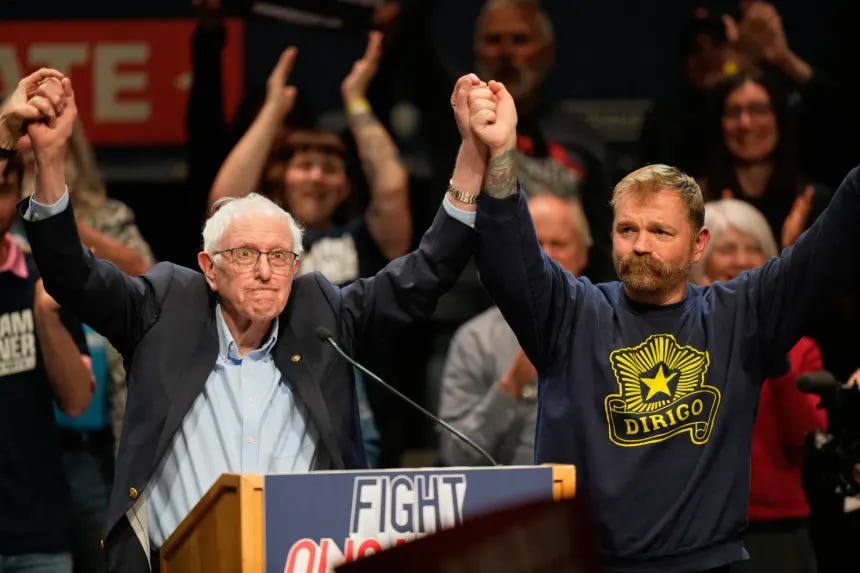
The pattern doesn’t belong to any one person — it belongs to a structure, and once you see it you can’t unsee it. I’m sure Platner’s father’s donation to Bernie had nothing to do with his endorsement… just a coincidence, right? We’re still mindlessly participating in pay to play politics.
There’s this thing I like to call the controversy laundering cycle. A candidate’s bad history surfaces. In this cycle, the creator’s first move is not to investigate, it’s to contextualize. The scandal gets swathed in a larger narrative about why the establishment wants this candidate destroyed. The audience never sits with the raw information long enough to form their own judgment because the interpretive frame arrives simultaneously with the facts. The pattern screams narrative management, not legitimate commentary.
I also want to point out proportionality collapse. Ever notice how minor establishment missteps get enormous coverage? Serious character questions about the favored candidate get one paragraph buried under eight about why the critics are bad actors. When the space given to a controversy is inversely proportional to its actual seriousness, that is brand protection – not journalism.
I’ve also clocked a weaponized subscriber relationship culture on Substack. This is one that people feel before they can really understand it. The creator spends time and “founder money” to build real intimacy with their audience. They make people feel known, understood and part of something. That intimacy becomes a pressure system. Disagreeing with the creator’s take stops feeling like intellectual disagreement and starts feeling like they’re betraying the community. That architecture, whether intentional or not, is a cult. Small c. But nonetheless, a fuckin’ cult.
We also need to understand what access capture is as well. When a creator has a direct relationship with a candidate with interviews, exclusives, shared platforms, and rallies, their coverage stops being independent. It becomes co-production. The creator now has a stake in the candidate’s success that has nothing to do with whether the candidate is actually good. Their credibility is tied to the outcome. You cannot cover someone you are invested in. One can only manage them at this point.
We should also talk about what the authenticity shield is too. Any candidate who fits the preferred class narrative, be it a veteran, farmer, outsider, working hands, gets a layer of protection that other candidates don’t get. Rough edges become proof of realness. Which psychologically, means the audience gets trained to distrust polish and trust rawness instead, regardless of the actual content of either. A polished lie and a rough truth are not the same thing. But the audience has been handed a heuristic that can’t tell the difference.
And then there is the better candidate problem. The one I started with.

Walter Rhein and I interviewed him last week. We reached out to Graham Platner to interview and were ignored completely. But, David was gracious enough to allow us to pick his brain. Here’s the interview if you’re interested in listening to it:

When a creator’s platform is built around a particular type of candidate, anyone who doesn’t fit that type becomes invisible or suspect. Quietly competent people with clean records and genuine progressive values don’t generate the drama that feeds the algorithm or the newsletter open rate. They don’t have a redemption arc. They don’t have rough edges that read as authentic. They just have the actual record. It’s not surprising to me that some of these bigger creators have absolutely no clue who David Costello is. Had they have done their proper homework before choosing the candidate for their audience, they’d have known him. Mainer’s would have known him. But the media doesn’t do their due diligence anymore and neither does the average voter. So, Costello slipped through the cracks.
The better candidates don’t get covered. And the audience never knows they existed. It’s a damn shame.
My Final Two Cents

The progressive Substack world was supposed to be different. It was supposed to be the thing we built after we got tired of watching corporate media decide who was electable, who was serious, who deserved oxygen. A lot of people, myself included, believed in that promise.
But a platform does not make a journalist. An audience does not make someone accountable. And anti-establishment energy, weaponized in service of a specific personality or candidate, is not resistance. It’s just a different establishment wearing a flannel shirt.
The question to ask of every creator you read, including me, is not whether they’re on the right side. It’s whether they’re doing the work that costs them. Whether they cover the thing that complicates their preferred narrative. Whether they have written the piece that lost them subscribers, goodwill, access.
Real accountability journalism is slower and less satisfying than the story the ecosystem wants to tell. It doesn’t always have a clean arc. The good candidate isn’t always the exciting one. The right call isn’t always the popular one.
But it is the work. And the work is the only thing that actually serves the people we say we’re fighting for.
The candidate nobody writes about deserves better.
So do you.
~Eevie
If a paid subscription isn’t in the cards right now, I completely get it — truly. But if you’ve ever read something here and thought “damn, she needs to keep doing this,” you can throw a few bucks in the tip jar over at Buy Me a Coffee.
No pressure. No guilt. Just me, asking nicely, with my hand out like a very earnest raccoon who writes controversial essays.
☕ buymeacoffee.com/eeviebateman
Thank you for being here. Seriously. You make this worth doing.
Great article! I've been telling writers not to give readers what they want, give them what they don't know they need. You are doing great work Eevie!
Brava!