

Picture a network of nearly four hundred journalists, scattered across eighty countries, every one of them sitting on the same secret. There was only one rule, tell no one. Like a fight club for journalists. Don’t tell your spouse. Certainly not your closest friend. Even their own editor-in-chief. For more than a year, the secret stayed in the shadows. It just sat there, growing heavier, while the powerful people buried inside it went on with their lives, unaware that hundreds of strangers were about to blow their entire world’s up.
Then, on a single day in April 2016, the silence broke everywhere all at once. Within days, a sitting head of government was gone.
Somewhere at the center of that network, the person who built it and kept it from cracking, was a woman almost nobody outside journalism has ever heard of. My curiosity fired off when I read this article a while back: The Panama Papers
The Panama Papers is generally considered one of the most consequential leaks in journalism history and she was secretly at the center of it.
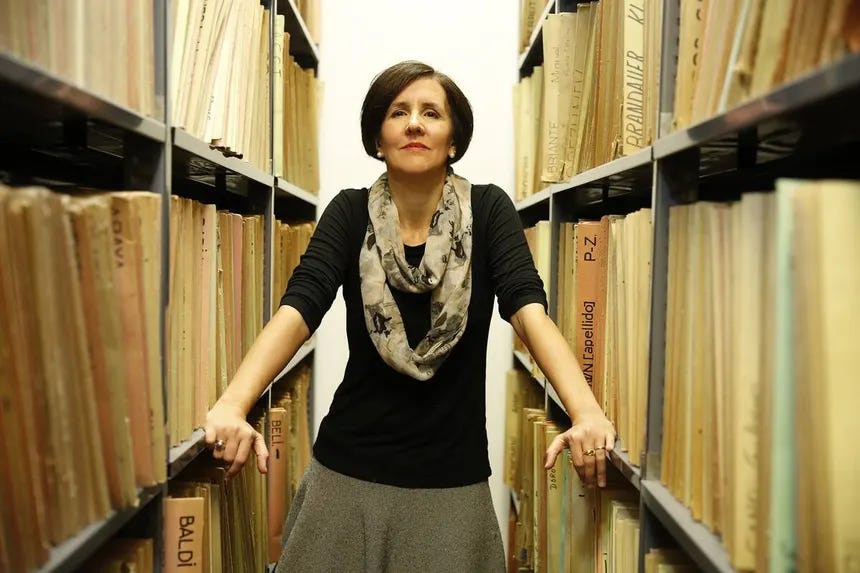
Her name is Marina Walker Guevara. There’s a version of this story where she’s simply the woman who broke the Panama Papers, responsible, twice over, for the largest journalist collaborations the world has ever seen. That version is wrong, but only barely. The way in which that version is wrong is precisely why it tells you everything you need to know about this incredible woman.
She didn’t actually break the leak. A source known only as “John Doe” handed 11.5 million files to a small German newspaper, Süddeutsche Zeitung, in 2015. What Marina did was something arguably harder. She built the machine that turned one newspaper’s leak into a four-hundred-person network, then did it again two years later with the Paradise Papers. The Paradise Papers was a 2017 leak of 13.4 million files from offshore law firm Appleby that exposed how deeply tax avoidance is woven into the world’s financial system. It named everyone from Queen Elizabeth II to Apple to Trump’s commerce secretary, and proved the Panama Papers wasn’t a one-off, it was the system working as designed.
But, she was not the source, or the household name most people remember. She was the mastermind — the person who figured out how to get 376 reporters in 80 countries to trust each other enough, and trust her enough, to keep one of the biggest fucking stories in modern journalism completely silent until the moment it detonated everywhere, all at once.
Mendoza
Marina Walker Guevara grew up in Mendoza, the wine country province at the foot of the Andes in western Argentina. Her family history carries its own immigrant thread. Her grandparents had crossed from Scotland to Argentina in the early 1900s, settling into a country that would, decades later, become the place she’d have to leave in order to become the journalist she wanted to be.
The turn came in her last year of high school. While her classmates enjoyed their last year with a senior trip, she stayed behind to intern at a local TV station in Mendoza, writing scripts and shadowing reporters. She learned a lot about herself that year. She learned that television wasn’t for her, but, reporting was. She’s mentioned on many occasions, “I just loved the idea of being where things were happening and being able to find ways to tell that story to people.”
She went on to study communication sciences at the Universidad Nacional de Cuyo in Mendoza, graduating magna cum laude, and started her career at Los Andes, the regional newspaper. But Argentina’s media environment in those years made the kind of journalism she wanted to do nearly impossible. There was little to no legal mechanism for getting access to federal documents — no real equivalent of a Freedom of Information request, no established culture of investigative digging. She wanted to go past the daily brief, past the three paragraphs on page six, into the hows and whys underneath a story. Argentina, as it was then, wasn’t going to let her do that.
Missouri
So she left. She enrolled in the investigative reporting master’s program at the University of Missouri’s journalism school, drawn by the idea that the U.S. had built out the methodology and the actual toolkit, for the kind of reporting she’d only been able to imagine back home. Missouri taught her, in her own words, to dream big. The same journalism dreams the U.S. government actively tries to kill today.
Isn’t that something…
She was still in the U.S. when Argentina’s economy collapsed in the early 2000s, one of the worst financial crises in the country’s modern history. She made the decision to stay rather than go home, partly because she believed the U.S. was still where she’d find what she was after journalistically, and partly because staying meant she could get a job and support her mother back in Argentina more effectively from there. It’s a small detail, but it matters. The career that eventually produced the Pulitzer Prize and the Panama Papers was, at its foundation, also a practical decision made under financial pressure, by a young immigrant trying to take care of her family. They should make a movie about her one day. This shit is straight out of Hollywood.
The Reporter Before the Editor
Long before she was managing hundreds of journalists at once, Marina was the one doing the digging herself. Over roughly two decades, she reported on environmental devastation caused by mining companies across Latin America, on illicit cigarette smuggling networks, and on the Bush administration’s abstinence-only HIV/AIDS prevention programs in Africa. The story she reported called, “Children of Lead,” was her investigation into lead poisoning in a small Peruvian town caused by an American-owned smelting company. The story drew international attention, and the company eventually left the town. It’s the kind of outcome she has described as the thing she loves most about the job. Of watching journalism actually move something in the world, not just describe it.
That proof that a story can force change, is what eventually pulled her toward the International Consortium of Investigative Journalists. She joined the ICIJ as an intern. Fourteen years later, she was its deputy director.
Building the Model
By the time the Panama Papers leak arrived, the ICIJ had already been quietly building toward something like it for years. Offshore Leaks in 2013, Luxembourg Leaks in 2014, the HSBC-based Swiss Leaks investigation in 2015, which Marina co-managed across 170 reporters in 60 countries was a journalistic rehearsal for scale. Each one taught the organization, and her specifically, how to get journalists who’d normally compete with each other to instead share sources, share findings, and publish together. The American Resistance could learn a thing or two from her.
When the Mossack Fonseca files landed, those were a Panamanian law firm’s internal records on the offshore financial dealings of the world’s wealthy and powerful, the ICIJ’s director, Gerard Ryle, said it as the biggest test yet of the model his deputy had been refining. Marina’s job was to find people who could be trusted with something this explosive, and she’s said she had to look past reputation and credits for something harder to spot. She looked for a genuine willingness to collaborate rather than scoop each other.
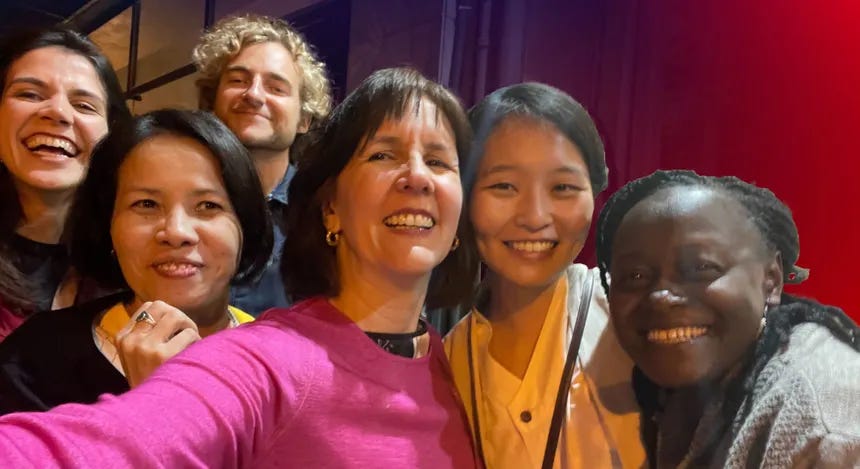
The secrecy demands were absolute. She told every reporter who joined the project, in essence, that this wasn’t something to screw around with. They were not to discuss with their spouse, their friends, their parents — that it was too important to risk. And it fucking worked. For more than a year, hundreds of journalists across dozens of countries sat on one of the most significant financial stories in history without a single leak breaking the embargo. When it published in April 2016, the fallout was damn near immediate. Iceland’s prime minister resigned within days, protests spread from Reykjavík outward, and governments from Pakistan to Panama scrambled to respond. The project shared the 2017 Pulitzer Prize for Explanatory Reporting. The following year, the ICIJ ran it again with the Paradise Papers.
Why She Stays Invisible
Ask Marina Walker Guevara what made the model work and she doesn’t talk about scoops or competitive advantage. She talks about trust. She has pushed back explicitly against the old image of investigative reporting as “isolated journalists working in secrecy,” arguing instead that the world’s biggest stories have simply become too global and too complex for any one journalist, or any one newsroom, to crack alone. The job of the editor, in her framing, isn’t to be the face of the story. It’s to be the reason 376 strangers in 80 countries believed they could trust each other enough to try.
That philosophy is probably the simplest explanation for why she isn’t a household name the way Ronan Farrow is. Farrow’s model runs through the reporter as protagonist — the story rides on a single name. Marina’s model runs through the network, and by design, the network gets the credit while the scaffolder stays in the room next door. She has said as much herself that investigative journalism, done her way, isn’t glamorous or fast. It’s slow, exhausting, mostly invisible work, and the payoff is a kind of change that doesn’t usually have her name attached to it.
Where She is Now
Marina Walker Guevera left ICIJ in 2020 to become executive editor of the Pulitzer Center, where she continues to back investigative and underreported global stories. She’s a co-founder of the Latin American Center for Investigative Journalism and sits on the board of the Global Investigative Journalism Network. In 2018, the Carnegie Corporation named her one of that year’s “Great Immigrants, Great Americans,” an honor she described as carrying real weight given how much immigrants in the U.S. were going through at the time. Over her career she’s won or shared more than fifty journalism awards — Polk, the Pulitzer, IRE, the Overseas Press Club, a special citation from Columbia’s Maria Moors Cabot Award, the Missouri Honor Medal for Distinguished Service from the school that first gave her the methodology she’d come to America looking for.
Now, I know what you’re thinking, because so am I:
EPSTEIN FILES!
If a paid subscription isn’t in the cards right now, I completely get it — truly. But if you’ve ever read something here and thought “damn, she needs to keep doing this,” you can throw a few bucks in the tip jar over at Buy Me a Coffee.
No pressure. No guilt. Just me, asking nicely, with my hand out like a very earnest raccoon who writes controversial essays.
☕ buymeacoffee.com/eeviebateman
Thank you for being here. Seriously. You make this worth doing.
I love this story, whistleblowers are incredibly brave people. Wonder if we’ll ever find out who John Doe is? The Epstein files are turning out to be very similar with the Butterfly Bureau working on deciphering all the redactions and contents. Jeff Newton of “From the Writer’s Cabin” had a podcast with Resistance Kitty and Rye Howard-Stone discussing their work. Fascinating!
Wow! Maybe she's working on the Epstein files 🤞🤞