

When I was a little girl, I dreamed of being an archeologist. There was something about being the first to see a piece of ancient history that always fascinated me. Fossils and tattered fabrics, bone fragments and ancient relics — they told a story. I’d see a fossil in a rock and wonder about that little animal’s last moments. How did it get there? What did the world look like when it was scurrying about? I’d see fragments of earthenware and wonder what delicacy it once held — or if it held food at all. My imagination would run wild with possibilities.
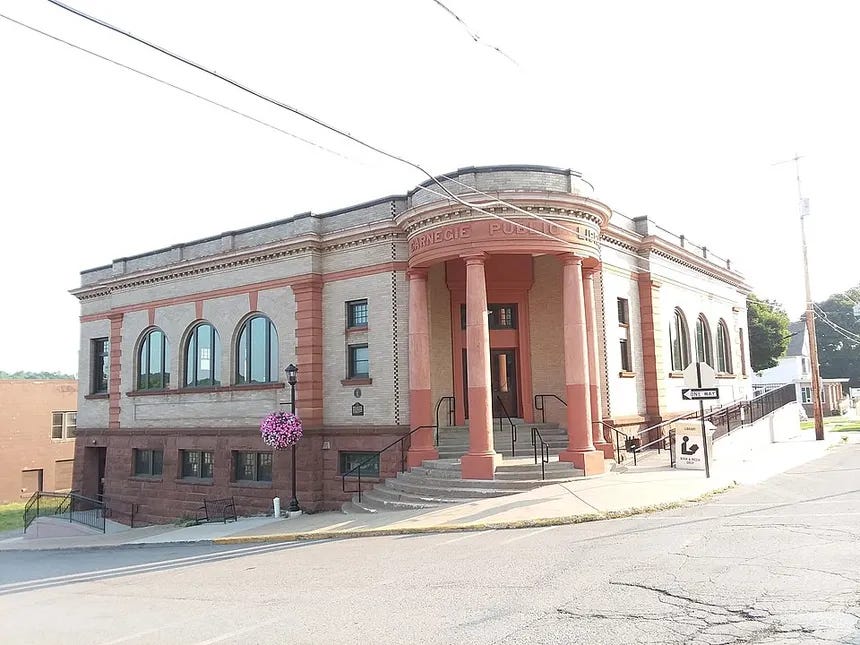
My parents never knew this about me. I don’t remember them ever asking about my hopes and dreams. They never cared. I don’t even think they knew my favorite color. I spent a lot of time in our local Carnegie library as a kid. It was air-conditioned and quiet. My life was loud, and that was a space I could go to finally hear my own thoughts. And I had many. I was an extremely inquisitive child — I asked a lot of questions and always had something to say about everything. Growing up neurodivergent, my brain was always on, 24/7, still is. It bothered the shit out of my parents. My questions and my hardheadedness.
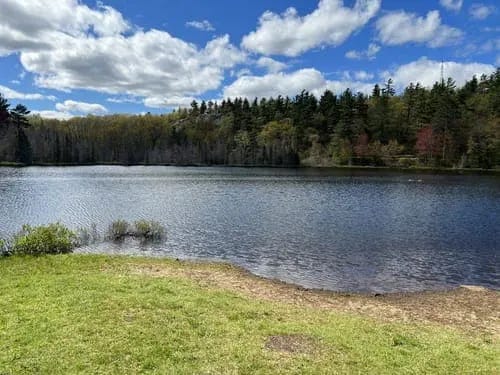
My sense of social justice was unshakeable. Being forced to survive in a patriarchal, rules-for-thee-not-for-me home felt like one battle after another. So I’d sneak off to the creek a couple miles from my house, or ride my bike to the Al Qual Recreation Park, down to “Baby Lake,” to skip rocks and catch turtles. But the library was where I went to relax and read about all the things my budding mind had questions about. It’s where I found answers. And on Saturdays, there was always a puppet show put on by the librarians. I’d sit back so all the really little kids could be up front, and just watch. Sometimes let a giggle slip out. At ten years old, I was one of the oldest at those puppet shows, and to giggle freely would mean I was a baby. I couldn’t have that. Being perceived by others is like death to a neurodivergent kid. So if a giggle did slip out, I was quick to play it off the best I could. The puppet shows eventually stopped by the time I grew into my teen years. I would’ve watched them then too, probably.
Space always caught my attention as well. Not as much as archeology, but I found myself wanting — no, yearning — to know. I just wasn’t smart enough to wrap my head around the vastness, or so I thought. Space was big-brain stuff. But I’d listen to documentaries and try to absorb as much as I could through books. My brain still struggles to compute how big the universe is, and all the incomprehensible rules of quantum physics. Human brains aren’t built for these numbers. At least mine isn’t. It makes me feel small and insignificant here on Earth — a mere speck of dust in comparison to the cosmos. The vertigo of realizing my entire life, every person I’ll ever know, every war and love story and election, happens on a speck orbiting a very average star in a very unremarkable arm of one galaxy among trillions.
Some scientists have even pointed to evidence that Earth sits inside a black hole.
Let your noodle chew on that for a while.
But then I grew up, and my dreams took a seat on the back burner, collecting dust with every passing year, every child born, and every hardship encountered. I did the easy thing. The cheaper thing. The survivable thing. And built a beautiful, yet challenging twenty-year career in early education, brick by brick. And then in 2021, it all ended.
The rewarding career I once believed in with my whole heart started to feel empty. I was stressed all the time. And tired. And hopeless. Not hopeless for myself, but for the industry I cared for and believed in so much. Education took a nosedive, and I wanted off the ride. I refused to go down with the ship.
But what was I without my career? Who was I without my career?
It got me thinking about my hopes and dreams again. The regret of letting other people decide my destiny for me — my parents, my ex-husband, my friends. For being so hardheaded and stubborn, I sure let them tell me who I should be. And then I found myself, at forty years old, hating my job, feeling too old to chase anything anymore.
And it was all bullshit. The truth I’d refused to face was that I wasn’t too old to do a damn thing. To fill the silence, I started to write. I pulled up everything I’d started and stopped, and page after page, began to put my memoir together. In July 2026, my editor handed me my final edited draft — ready to polish and publish.
And here I am again — impostor syndrome paralyzing me once more. A completed manuscript, ready to go, and an overwhelming urge to hide. I was told once that impostor syndrome puts the problem inside your head, when a lot of what gets labeled impostor syndrome is actually a rational response to exclusionary, gatekept environments.
Growing up in a hostile, unpredictable environment taught me early on that being seen carries risk. My nervous system wired itself to stay small, because staying small meant staying safe. It’s an old survival response, still firing in a moment that no longer requires it. I’ve done a lot of work over the last ten years…over came so much. This is silly.
I know these things. Putting them into practice is the hard part.
If there’s one thing to take from this, it’s to never give up on your dreams. Never let others dictate who you are or what you’re supposed to be doing — it can cost you days, weeks, even years stuck in impostor syndrome and survival mode. You could be sitting on a manuscript that reaches people just like you. Helping them feel a little less alone in the world, bridging the connection we all yearn for.
My manuscript is complete. All I have to do is publish it.
Mmm, maybe next week.
Just publish it and let it take its own path in the universe! I have never understood imposter syndrome (agree that it is a construct to keep us in line) but appreciate what you have shared about the conditioning that got you here and what you have overcome. If it helps as a different perspective, i am also neurodivergent and inhumanly stubborn but perhaps thanks to different parents, neglectful rather than destructively hurtful, that has translated into achieving seemingly impossible things. In doing so, i always knew that I earned every effing step of every single path by my work and efforts. My point is, so have you (achieved impossible things and earned every single thing). So let that story out there with a whole heart and let the freedom of that sit with you as a measure of that success.
See Eevie, this is one of the reasons I am very angry at my parents, especially the tiger types. When I scored 100% in one course, for example, the old man would rather ask me who else scored 100. This is where I question everything I did and I unraveled quite fast to a point where it felt good to score 72 (a C average). I had a high IQ as well. I am not neurodivergent either. I managed all this with a bad hearing. I survived all this shit. I wish I could have studied public and international affairs as Masters but too burned out. I am content with Finance world for now. I am confident of my abilities, people at work look up to me, I fight for marginalized folks, I always like to hype people like you. Stay strong, keep writing, be vulnerable, be free, discover yourself. There is really no limit to what we all can accomplish. You have been a teacher, a director. I understand there’s always this nagging feeling whether all this achievements are really true. Never let that put you down. Be proud, be selfish. You are not hurting anyone so no need to hurt yourself with astray thoughts. We teach and learn as much as we can. We fail, struggle, fall down. Just get up, pick up your pieces, there’s another day. Think of the people in Gaza. Think of the African folks. You can do it, Eevie!! 💪🫶🔥💙