

New York City. May 10, 1866. The Church of the Puritans.
Frances Ellen Watkins Harper stood on a platform beside Elizabeth Cady Stanton and Susan B. Anthony at the Eleventh National Women’s Rights Convention. She was a poet, an abolitionist, and a Black woman who had been lecturing against slavery since 1854, published poetry read across the country, and written an open letter to John Brown that reached tens of thousands of Americans. She was not new to righteous fury. She was not new to rooms full of people who needed to hear something they didn’t want to hear.
She told them anyway.
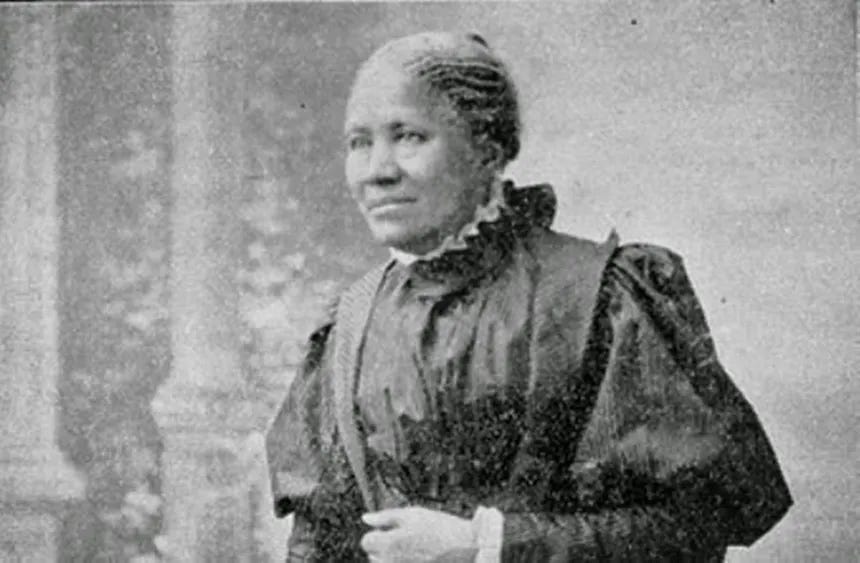
“We are all bound up together in one great bundle of humanity,” she said, “and society cannot trample on the weakest and feeblest of its members without receiving the curse in its own soul.” And, “You white women speak here of rights. I speak of wrongs.”
The audience applauded. They were so moved they voted that very day to form the American Equal Rights Association — a new organization dedicated to the voting rights of both Black Americans and women. They disbanded it four years later when it became inconvenient.
That is where this story starts.
With a documented speech, in recorded proceedings, in a specific building, on a specific date. Frances Ellen Watkins Harper told white women exactly what was happening, exactly what was at stake, and exactly what it would cost everyone if they chose proximity to whiteness over stated principles.
And these bitches chose proximity to whiteness.
They have been making that choice, in documented, verifiable, historically traceable ways, for 158 years. And Black women have been right about the consequences every single time. White women have had 158 years to reckon with that. Most still haven’t. 1868.
The Betrayal Gets a Name
The 15th Amendment was being debated. It would give Black men the right to vote. It would not give women, any women, the right to vote. Elizabeth Cady Stanton and Susan B. Anthony, who had called themselves abolitionists, opposed it. That much is historically complicated. What is not complicated is what Stanton said out her own two lips. In the December 1868 issue of The Revolution, the newspaper she published with Anthony, Stanton raged about “unwashed and unlettered ditch-diggers, bootblacks, hostlers, butchers, and barbers” getting a vote before women.
At a suffrage convention shortly after, she declared proudly, “We educated, virtuous white women are more worthy of the vote.” She also said — and this is in the historical record at the Gilder Lehrman Institute, her own words, no paraphrase required — that it was “better to be the slave of an educated white man, than of a degraded, ignorant black one.” The mother of American feminism said that.
What a bigot. Fuck Susan B. Anthony. For real.
Frances Ellen Watkins Harper, the same woman who had stood on that platform two years earlier asking white women to recognize their shared humanity, endorsed the 15th Amendment. She understood that Black men needed the vote as a matter of survival, not status.
Lynching was not a metaphor. Racial terror during Reconstruction was not a concept. It was real. And horrific. Frederick Douglass called the ballot “safety.” He meant it literally. People were being murdered. Stanton framed it as an insult to educated white women. Harper was right. Stanton was wrong. The movement fractured along exactly the line Harper had warned it would. The women who wanted power for white women only learned to speak the language of freedom, and nobody checked the fine print. I wish it was ancient history, but it keeps showing up in our voting booths.
53% of white women voted for Donald Trump — a 34 count felon, adjudicated rapist, known pedophile and certified dipshit, in 2024. Un-fucking-believable.
1913. She Went to the Back and Then She Didn’t.
By 1913, the suffrage movement had been running for 65 years while systematically cutting Black women out of its leadership, its conventions, and its strategy for most of that time. Ida B. Wells-Barnett had spent decades documenting lynching, building institutions, and fighting for the rights of Black people and women simultaneously. For her, as for Harper, those were not separate fights. She founded the Alpha Suffrage Club in Chicago. She organized. She showed up.
On March 3, 1913, she showed up in Washington, D.C., for a national suffrage parade organized by NAWSA. More than five thousand women were set to march. The day before, as the Illinois delegation was rehearsing its formation, NAWSA leadership sent word to keep the delegation “entirely white.” Black women were to march at the back. The reason was explicit. Documented.
These southern white twats would not march otherwise. They wouldn’t march if their own confederate comfort was threatened — cowardice dressed up as gentility, racism dressed up as propriety, and the rest of us left to bleed for it.
NAWSA needed Southern support to get the amendment passed. Black women were the price of admission. Wells-Barnett said no. “When I was asked to come down here,” she told them, “I was asked to march with the other women of our state, and I intend to do so or not take part in the parade at all.” She stepped back. She waited. When the Illinois delegation marched past her, she stepped out of the crowd and rejoined them.
The Chicago Tribune photographer caught it.
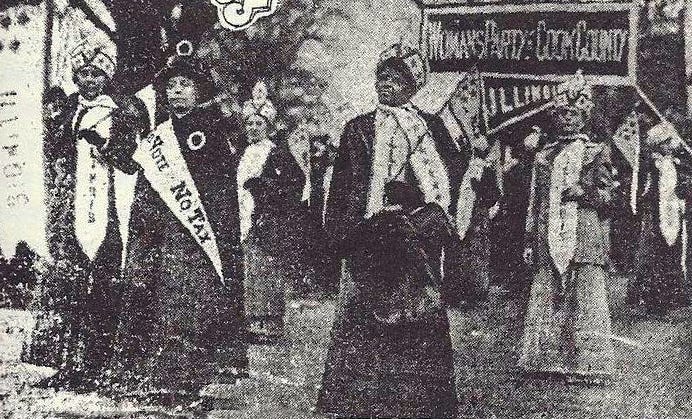
The Chicago Defender called her the “Queen of our race.” NAWSA got what they wanted. They kept their Southern white support. They built their movement around the comfort of women who needed Black votes diluted rather than counted. They used Black women’s exclusion as a political bargaining chip for progress.
Seven years later, the 19th Amendment passed. White women celebrated.
1920. The Victory That Wasn’t.
August 18, 1920. Tennessee became the 36th state to ratify the 19th Amendment. Twenty-six million American women were nominally eligible to vote. Black women in the South were not among them in any functional sense. The same poll taxes, literacy tests, grandfather clauses, fraudulent registration practices, and outright violence that had blocked Black men from voting since Reconstruction’s collapse were applied immediately to Black women who attempted to register. Some registrars handed Black women a blank sheet of paper and told them to fill it out. There was no federal enforcement mechanism. There was no suffrage organization that treated this as its problem.
When Black women in the South reached out after 1920 to the major suffrage organizations, reporting that they still could not vote, the documented response was, “That’s a race question. It doesn’t concern us.”
Read that again, because that is fuckin bonkers.
These are the organizations that had just won their great victory for women’s rights, or rather, racist ass white women’s rights. Black women came to them and said, we still can’t vote. And they replied with, it’s not our problem.
Harper had told them in 1866.
Wells-Barnett had told them in 1913.
The movement looked directly at Black women’s ongoing disenfranchisement after its celebrated triumph and decided it was someone else’s fight. Black women waited 45 more years, until the Voting Rights Act of 1965, and only because of a movement that white mainstream feminism did not lead, did not fund, and did not show up for.
Forty-five years.
1977. They Wrote It Down
A group of Black feminists in Boston had been meeting since 1974. They called themselves the Combahee River Collective, named for a raid organized by Harriet Tubman in 1863 that freed hundreds of enslaved people along the Combahee River in South Carolina.
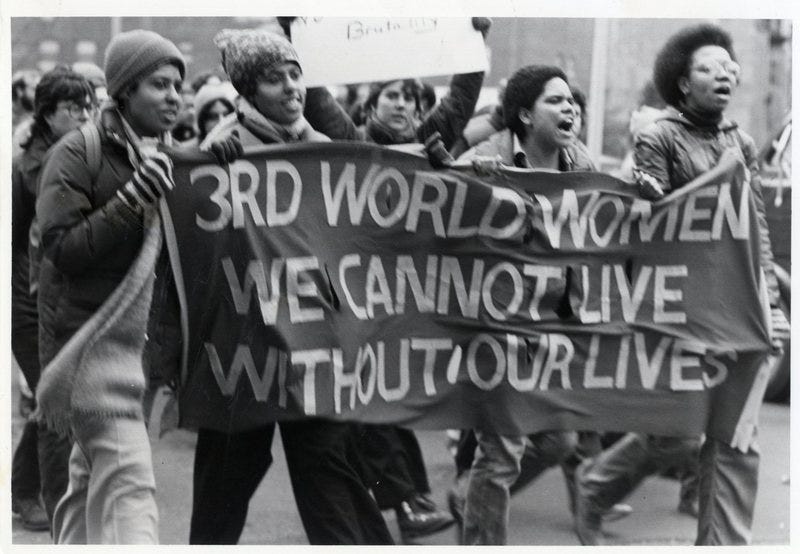
In April 1977, they published what would become one of the most important political documents in American history. Not because it was radical in the sense of being new. Because it was radical in the sense of being precise. “The major systems of oppression are interlocking,” they wrote. “The synthesis of these oppressions creates the conditions of our lives.” They were saying what Harper had said in 1866, but with a century of additional evidence, named exactly, documented carefully, in language that should have been impossible to misunderstand.
They also wrote, “If Black women were free, it would mean that everyone else would have to be free since our freedom would necessitate the destruction of all the systems of oppression.”
Mainstream white feminism spent the next several decades treating this framework as a niche concern. Too divisive. Too specific. Too much. The feminist movement of the 1970s and 1980s organized and marched and won battles, and kept building on a foundation that, as Black women had been saying for over a century, was not designed to hold weight for everyone.
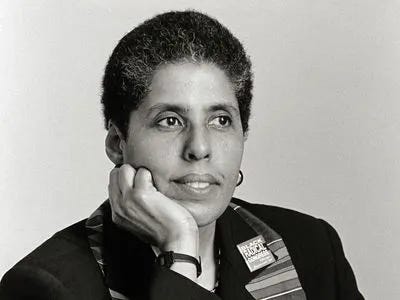
Barbara Smith, one of the Collective’s founders, said in 2021, “Black women have a right to create a political agenda based on our intersecting identities.”
And why was that so important at the time? No one else believed it.
Not in 1866. Not in 1913. Not in 1920. Not in 1977.
White women, answer this honestly — do you believe it now?
2016–2024. Three Elections. Same Choice.
Black women voted against Donald Trump in 2016 at approximately 94%. In 2020, approximately 91%. In 2024, approximately 90%. The most consistent voting bloc in American democracy. Three elections. No ambiguity about what they understood the threat to be.
White women voted majority for Trump in all three. What. The. Fuck.
In 2024, according to data from the Center for American Women and Politics at Rutgers University, more than six in ten non-college-educated white women backed Trump. White evangelical women supported the Trump ticket at eight in ten — up from 71% in 2020. This was after Roe v. Wade had been overturned. After a federal court found Trump civilly liable for sexual abuse. After three full elections of documented evidence about what his administration meant for women’s rights, healthcare access, and voting rights.
That’s a special kind of stupid right there. And, in my honest opinion, deeply shameful.
Black women knew. They had said it a million times. They voted accordingly. The pattern Stanton established in 1868, that when it comes down to it, white women will align with the white power structure, held in 2024 with the same grim reliability it has held for 158 years. This is not a coincidence, nor ignorance. At some point a pattern this consistent, this documented, this unbroken across that many generations stops being a failure and becomes a choice. White women keep making it. And they keep being shocked when the consequences arrive, as if Black women hadn’t told them, in detail, exactly what was coming.
Remember this when you or your daughter is bleeding out in a hospital parking lot because of pregnancy complications.
Or when you or your daughter is forced to carry a dead fetus to term.
Remember this when you or your daughter gets raped.
Remember this as you get your paycheck only making .70 cents to every white man’s dollar. The administration the majority of white women voted for also targeted the Women's Bureau of the Department of Labor and other federal programs that help women get high-paying jobs in male-dominated industries.
This is what your proximity to whiteness bought you, your daughters and every other woman in America. Aren’t you tired of that boot on your neck yet, ladies?
The Question History Is Actually Asking
I don’t write this as an argument that white women are irredeemable. It is not a call to despair. It is a demand for honest accounting and a little off gassing of the overwhelming anger everyone feels right now. The historical record, from the documented proceedings of the Eleventh National Women’s Rights Convention in 1866 through the exit polling data of November 2024, is deliberate in that, Black women have been right. Specifically. Documentably. On the record.
About the nature of the threat. About the shape of the coalition. About what it costs everyone when the movement protects white comfort over Black lives. About what democracy actually requires versus what white women have been willing to offer it. They said it first. They said it loudest. They paid for it with 45 years of disenfranchisement while white women celebrated a victory built on their exclusion.
They kept saying it anyway. They wrote it down. They voted it, consistently, every election, while the majority of white women voted against their own interests and bodily autonomy and then had the audacity to be surprised at the results. Frances Ellen Watkins Harper stood in a room full of white women in 1866 and told them that society cannot trample on its most vulnerable members without receiving the curse in its own soul.
She was describing a principle. She was also making a prediction. Look around. The question white women need to sit with is not whether Black women are worth believing. That answer has been in the record for 158 years. The question is, why do you keep deciding they’re not? What does it cost you to believe them? What has it cost everyone that you haven’t?
If a paid subscription isn’t in the cards right now, I completely get it — truly. But if you’ve ever read something here and thought “damn, she needs to keep doing this,” you can throw a few bucks in the tip jar over at Buy Me a Coffee.
No pressure. No guilt. Just me, asking nicely, with my hand out like a very earnest raccoon who writes controversial essays.
☕ buymeacoffee.com/eeviebateman
Thank you for being here. Seriously. You make this worth doing.
Thank you for this history - I had no idea. It was and is shameful, and we MUST do better; otherwise we deserve exactly that to which we're all being subjected.
I feel the need to respond, although typically I don't. Your very honest, historical article stirred my heart. I'm a liberal white woman from the south, there's a few of us about. The history you shared, I had no idea, so thank you. As a woman in corporate America, I had to work twice as hard as my male coworkers for less money. I was honored during my career to work for two black women who had to work three times as hard as their male management peers, of course for less money. I appreciate your brutal honesty, and just feel the need to let you know. I'm appalled by the history of this country and the current regime wrecking havoc in this country and the world. I won't be celebrating 250 years of fucking bullshit and the erasure of the truth. Keep telling the truth